Modern defense and aerospace data architectures increasingly rely on multi-sensor data fusion to ingest and analyze multiple inputs for real-time situational awareness and mission critical decision-making. It’s a powerful concept, but implementing sensor fusion is no small feat.
As sensor bandwidth increases and processing demands rise, system architects face serious challenges — especially in embedded environments with limited CPU resources. Traditional data transfer methods are inefficient, potentially risking mission success.
Here’s how RoCE v2 streamlines data transfer to unlock true sensor fusion.
Traditional embedded computing systems process sensor data in silos – radar on one blade, EO/IR sensor video streams on another – each with its own path and compute resources. But as applications become more sophisticated and the number of sensors increases, more resources are required for data transfer.
The problem is that data transfer steals CPU cycles that should be reserved for data processing. SWaP-constrained PX chassis can’t house larger CPUs or many cores, so the CPU becomes taxed with data movement and can’t keep up.
With sensor fusion, the system must be able to ingest multiple data streams into a single compute node to perform real-time analytics and decision-making, but overwhelmed CPUs become bottlenecks that increase latency and delay decisions.
In mission critical environments, delays aren’t just inefficient – they’re dangerous. Sensor data needs to arrive fast, in sync, and ready to process, or the entire mission is at risk.
RoCE v2 (Remote Direct Memory Access over Converged Ethernet) allows one device to write data directly into another device’s memory without using the CPU. It runs over Ethernet, making it scalable and routable across embedded systems. That means sensor data can be transferred at high speeds with low latency and nearly no CPU overhead.
Here’s how it works:
And here is an example of sensor fusion in action:
Thus, RoCE v2 doesn’t simply solve a data movement problem. It enables true sensor fusion, where insights are drawn from combined sensor data streams in real time, rather than analyzed separately in silos.
Enabling high-speed sensor fusion with RoCE v2 isn’t simple, especially during mission critical applications in embedded environments that present significant data challenges.
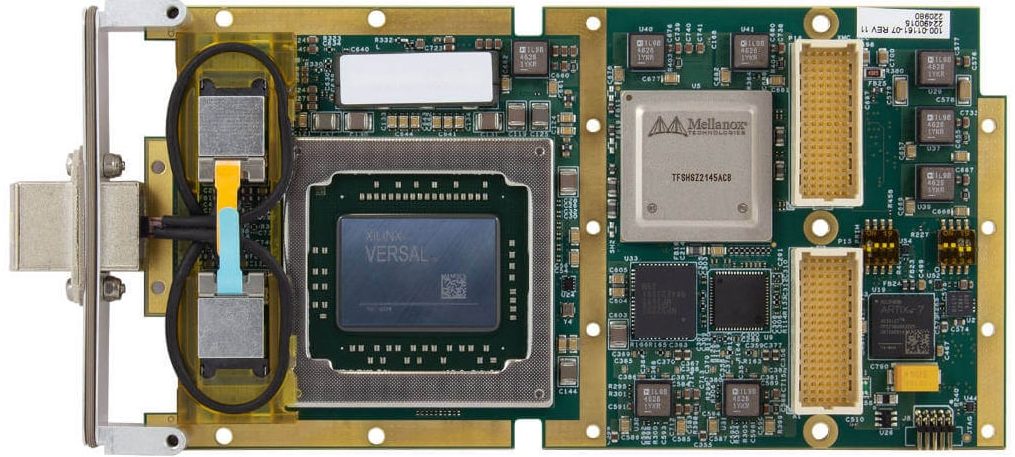
At New Wave Design, one of the most unique solutions we’ve developed is to pair AMD Versal® Adaptive SoCs with NVIDIA ConnectX-7 NICs on a single board. Though that’s not an industry-standard configuration – the components are not designed to work together out of the box – there are good reasons to integrate them for sensor fusion:
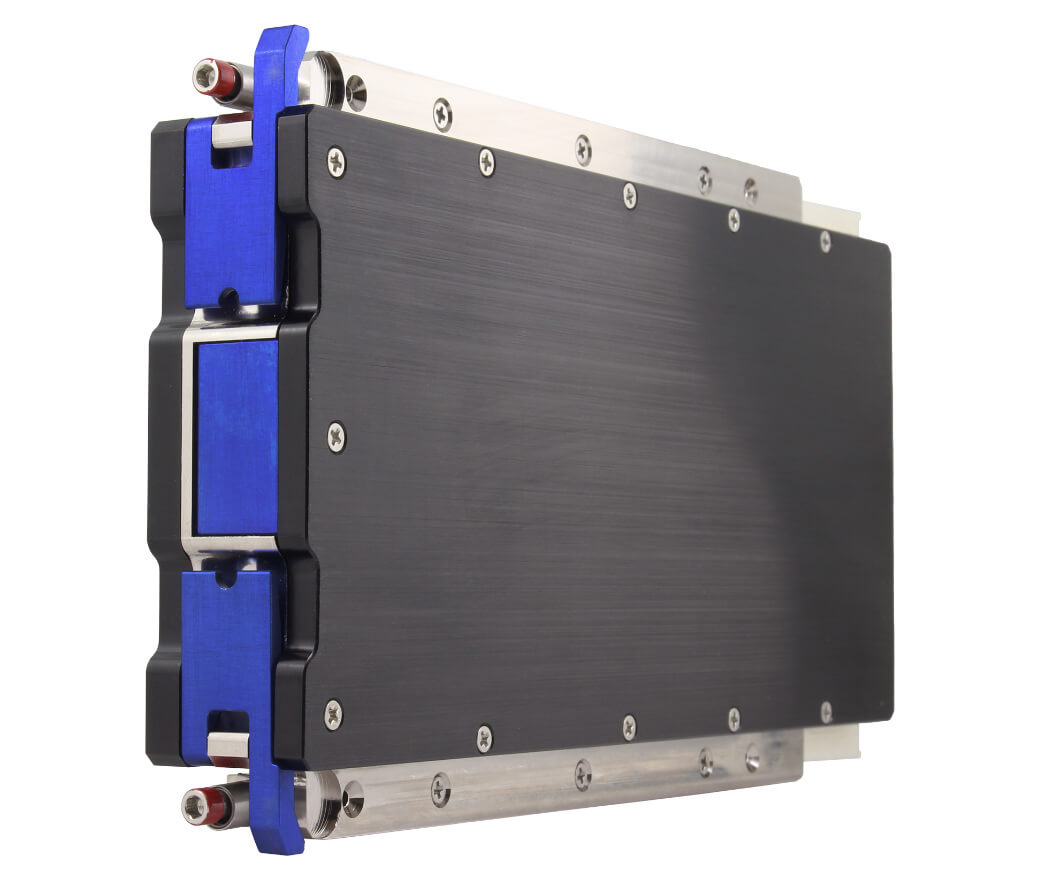
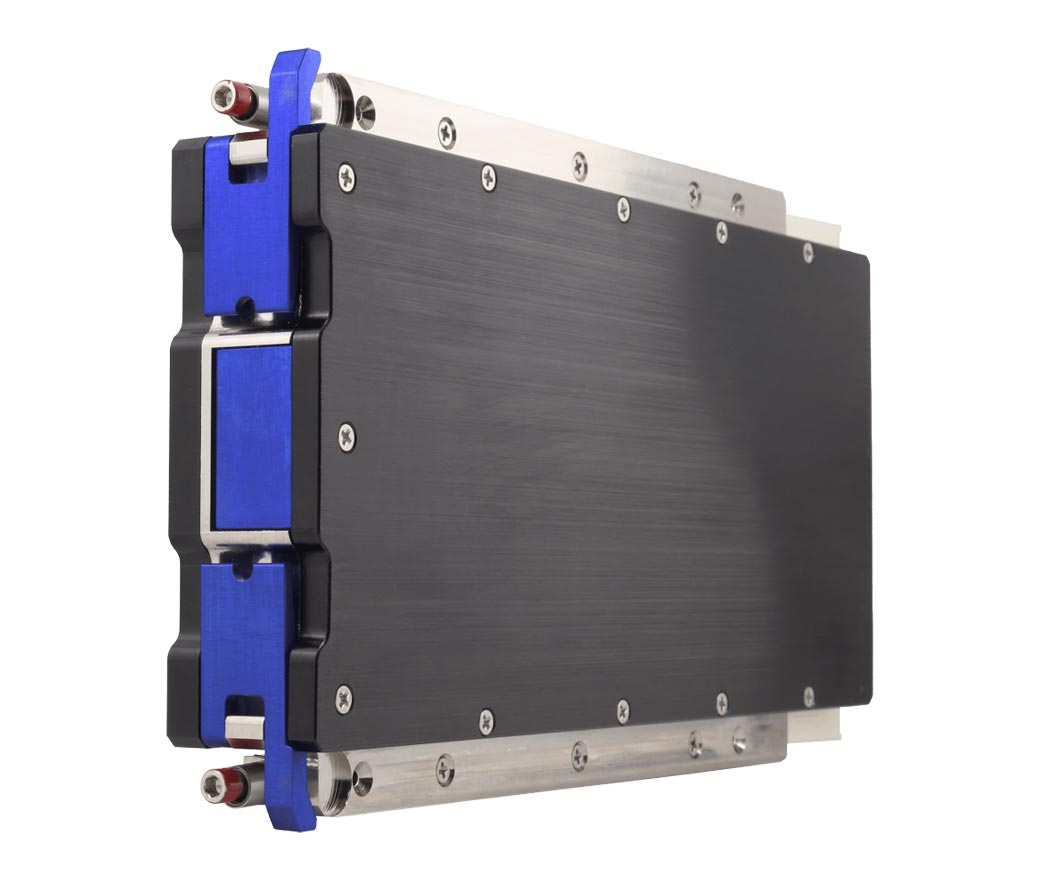
New Wave Design’s V6067 3U VPX Versal® Premium ASoC FPGA + Ethernet Offload Optical I/O Module with QMC Site is a great example of these paired capabilities that can effectively take advantage of the value RoCE v2 brings to the sensor fusion application. Tightly coupled in a 3U VPX form factor supporting open architecture, these types of solutions help data architects rapidly solve the data movement challenge.
Sensor fusion is essential for modern military and aerospace applications, but it demands more from embedded computing systems than traditional architectures can deliver. RoCE v2 provides the speed, efficiency, and scalability needed to power mission critical sensor fusion without overwhelming the CPU.
Want to streamline high-speed data transfer in your next design? Contact New Wave Design to explore solutions engineered for mission critical success.
If you need help finding the right interface, protocol or need to tweak our FPGA cards for your teams’ needs, contact New Wave Design to discuss your requirements.
Contact us today to see how New Wave Design can collaborate with you to achieve your objectives, leveraging our cutting-edge military and aerospace solutions. Experience our dedication to innovation, quality, and unparalleled customer satisfaction firsthand, and together, let’s turn your challenges into triumphs.
"*" indicates required fields