Form factor is a critical design decision that directly impacts the performance and reliability of embedded modules that modern aerospace and defense systems rely on for mission success. It’s particularly crucial for rugged optical transceivers, which must withstand extreme temperatures, shock, and vibration in some of the world’s harshest environments.
In these high-stakes situations, the wrong form factor not only bottlenecks performance, it can cause systems to fail in the field and jeopardize the mission.
Understanding transceiver packaging and placement is key to balancing performance and environmental resilience. Here, we explore rugged optical transceiver form factor options and considerations for choosing the best option for your application.
SFP and QSFP modules are commonly mounted on the front panel and must be placed on the board’s edge, offering less overall layout flexibility. They often use LC or similar connectors and can be prone to mechanical failure, as shock and vibration can cause their retention levers to loosen and disconnect. That said, there are rugged versions of SFP/QSFP modules that solve the retention problem, and there are other front-panel mount rugged modules that are soldered down.
Additionally, SFP/QSFP modules don’t offer the high channel densities that other options can achieve. For example, an XMC mezzanine board with SFPs typically supports only three to four optical channels.
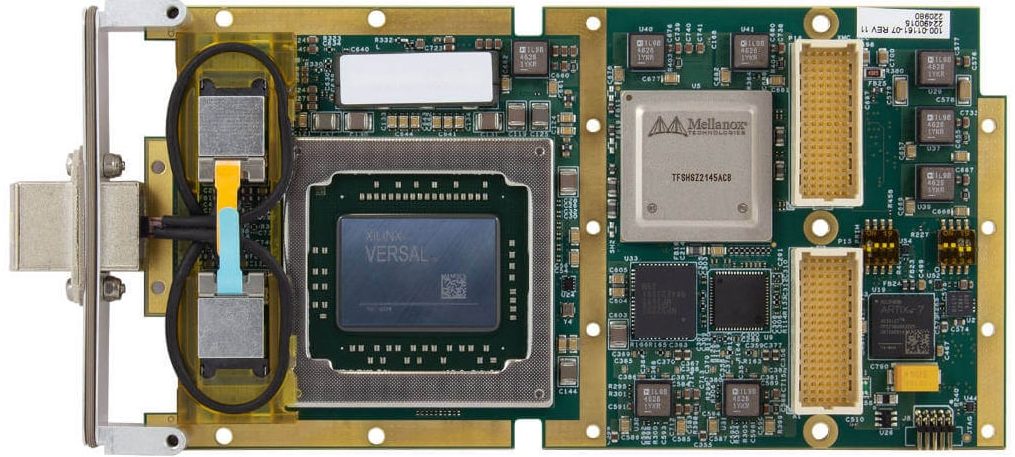
Mid-board optics can be placed anywhere on the circuit card, offering far greater layout flexibility than edge-mounted modules. They can be soldered down or securely mounted to withstand shock and vibration, and they often feature pigtail connections or MT-style connectors. This makes them highly adaptable, as they can route to front panel MPOs, VITA 66 backplanes, or custom external connectors.
Mid-board optics also support much higher channel densities in a compact footprint, as some modules allow up to 12 transmit and receive (Tx/Rx) channels. New Wave Design extensively uses mid-board optics because their space-saving layout, rugged design, and high density make them a reliable choice for extreme environments. An example of a product utilizing mid-board optics is New Wave Design’s V1162 Dual-Port Programmable 100G Rugged Ethernet XMC ASoC Card.
Designed for VPX systems, these optical modules are soldered at the board’s edge and align directly with the backplane optical connectors. No pigtails are required, which reduces internal cabling.
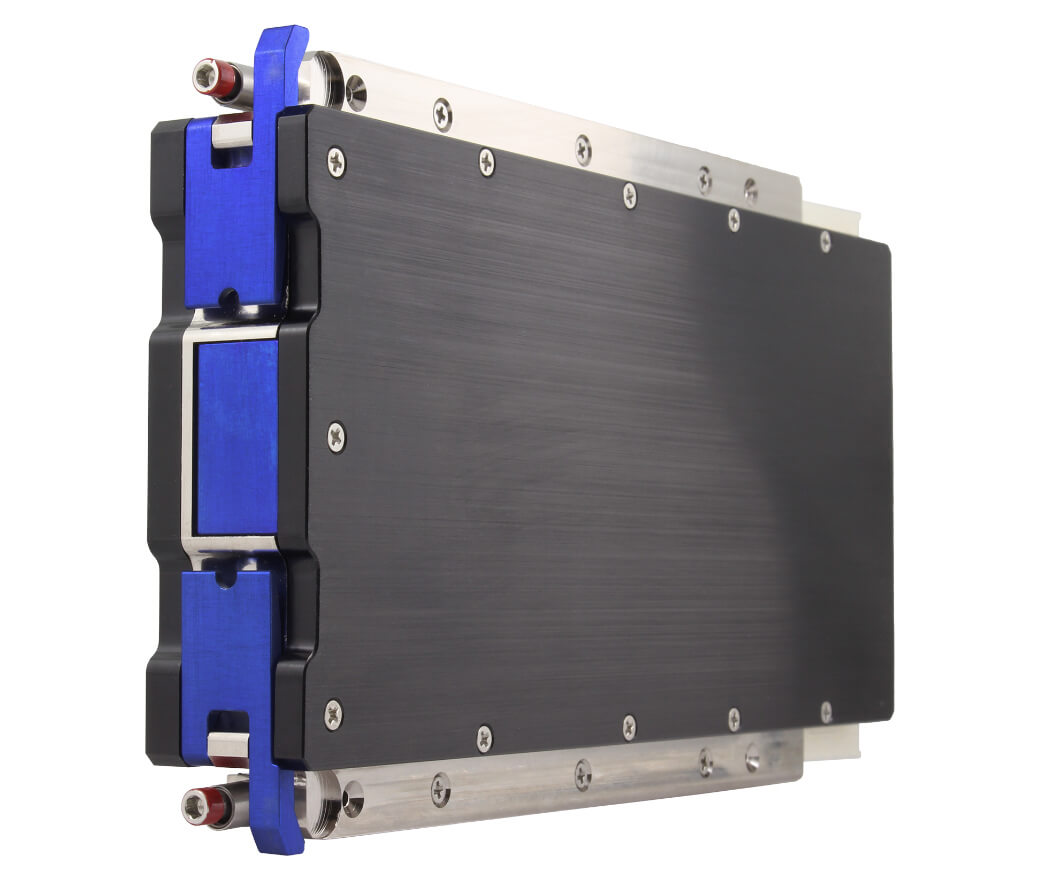
The VPX/VITA 66.5 form factor is optimized for compact, rugged systems, such as 3U VPX modules. New Wave Design’s V6065 3U VPX Versal® Premium ASoC FPGA Optical I/O Module with XMC Site is a great example of a 3U VPX module. However, if front-panel access is required in your application for test or debug purposes, mid-board or QSFP options might be easier to implement.
3U VPX may be compact, but its constraints have major implications for signal integrity, optical routing, and system integration. Start with this resource to understand the design trade-offs and challenges engineers need to navigate.
It’s important to consider mechanical interfaces and environment when deciding which form factor is best for your rugged optical transceivers.
Pluggables can fail in high-vibration environments. For example, lever mechanisms (like on SFPs) can rattle loose and disconnect if they’re not properly secured. Even if the form factor is temperature-rated, mechanical instability can cause link failure in the field.
Connector selection directly impacts signal integrity. In many cases, failures occur not within the optical transceivers themselves, but in the interface connectors – such as the LC connectors in the SFP/QSFP cage. In addition, poor connector alignment or dirt and debris can degrade performance. Shock- and vibration-rated connectors significantly improve reliability.
Soldered-down and mid-board optics offer superior mechanical stability, as secure mounting reduces the risk of shock and vibration disconnects. Mid-board optics also provide layout flexibility, allowing engineers to place optical modules away from vibration-heavy zones. They decouple where optics are placed on the circuit card from where they are terminated, enabling robust routing options to front-panel, backplane, or external interfaces.
Rugged optical transceivers enable high performance aerospace and defense systems with massive data movement, but it’s critical to understand form factor options to ensure environmental factors don’t cause issues. Even if the rugged optical transceiver is rated for extreme temperatures, shock, and vibration, if the connectors and form factor can’t withstand them, the system won’t work. Everything must work together to ensure fast, reliable data movement when failure isn’t an option.
Want help choosing the right form factor for your high-stakes application? Our experts can guide you toward a rugged optical solution that holds up when it matters most. Let’s talk.
If you need help finding the right interface, protocol or need to tweak our FPGA cards for your teams’ needs, contact New Wave Design to discuss your requirements.
Contact us today to see how New Wave Design can collaborate with you to achieve your objectives, leveraging our cutting-edge military and aerospace solutions. Experience our dedication to innovation, quality, and unparalleled customer satisfaction firsthand, and together, let’s turn your challenges into triumphs.
"*" indicates required fields