Embedded computing systems in military and aerospace applications move massive amounts of data – and they do it fast. However, the growing number of sensors is taxing traditional systems with increasingly large amounts of data that mission computers must rapidly ingest, interpret, and process to effectively perform their functions.
CPUs are struggling to keep up. While Ethernet speeds continue to climb, processor performance has plateaued, creating bottlenecks that slow data movement and threaten real-time decision-making.
Enter RoCE v2 — Remote Direct Memory Access over Converged Ethernet. By enabling high-speed, low-latency data transfer without burdening the CPU, RoCE v2 is becoming the go-to solution for high-performance systems.
Over the last 25 years, Ethernet speeds have skyrocketed. What was once considered state-of-the-art at 10 Gigabit Ethernet (10GbE) is now dwarfed by 800GbE, with 1.6 Terabit Ethernet already in view. But CPU performance hasn’t followed the same trajectory. After strong gains in the early 2000s, CPU speed growth has slowed to a crawl at only 3% annually today.
This widening gap creates a fundamental problem for embedded systems: while networks can deliver massive amounts of data, CPUs can’t process it fast enough. The result is a bottleneck that limits system performance no matter how fast the network gets.


CPUs must perform a fixed amount of work for every Ethernet packet, no matter how fast the network is. Each packet involves kernel overhead, memory copying, and context switching, all of which steal CPU cycles from actual processing tasks.
In traditional systems, faster Ethernet just means more packets the CPU has to handle. If Ethernet speed increases by eight times, but CPU performance stays flat, the CPU becomes a bottleneck. At some point, no number of cores can keep up, especially in embedded environments with size, power, and weight (SWaP) constraints.
In short, investment in faster Ethernet is pointless if the CPU can’t keep up.
RoCE v2 is a high-speed, low-latency solution that eliminates the “transfer tax” and frees the CPU for compute tasks. Instead of moving data in and out of memory, CPU cycles are reserved for mission-critical processing. It’s the most CPU-efficient way to move large volumes of data in embedded systems today.
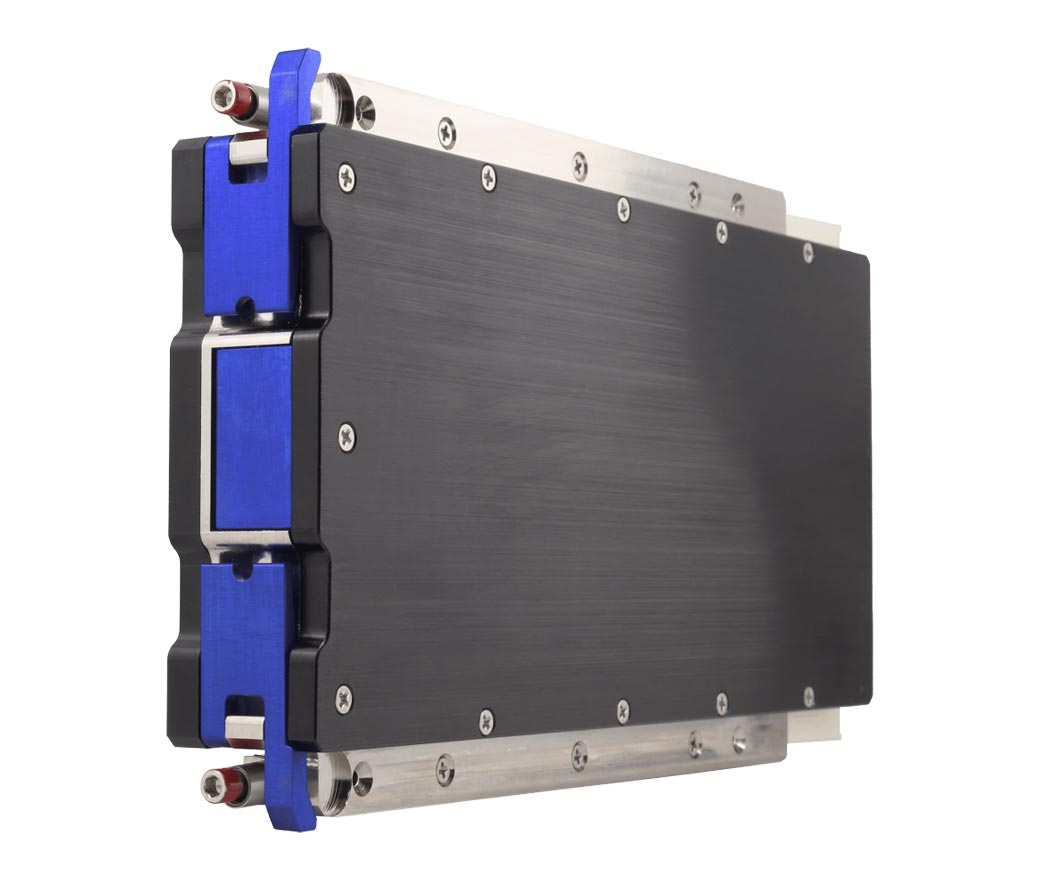
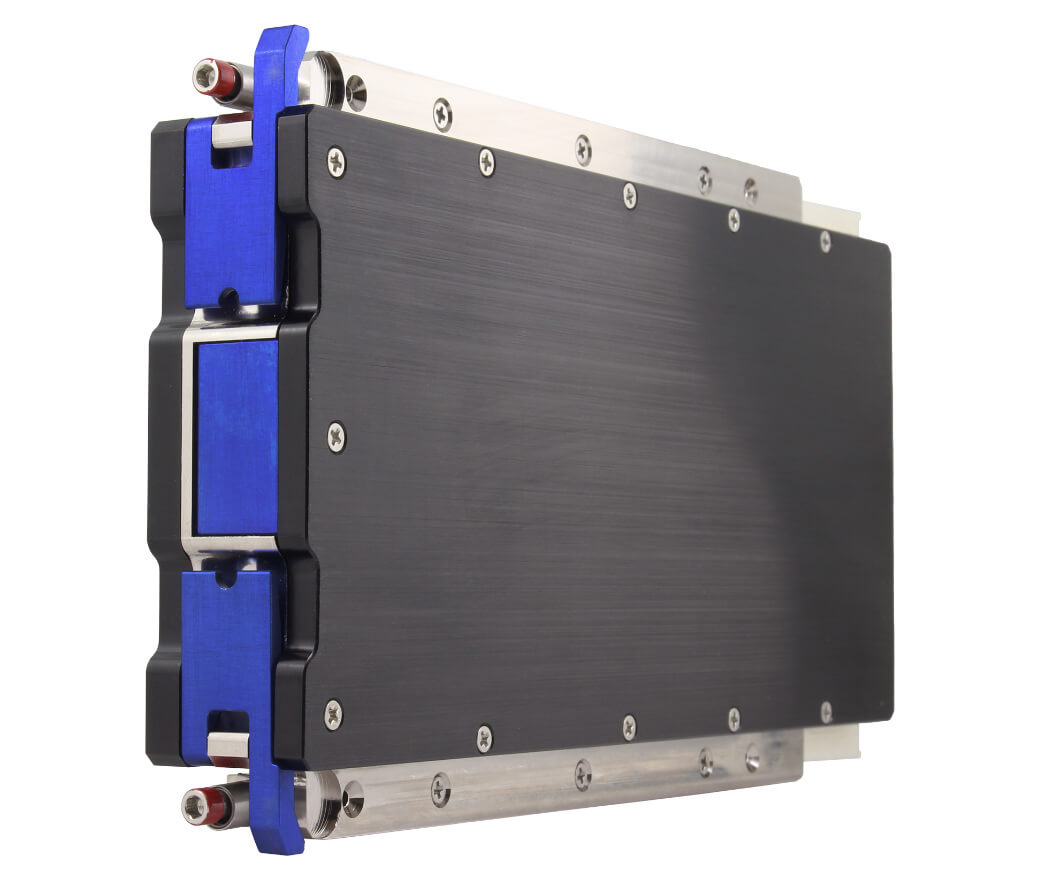
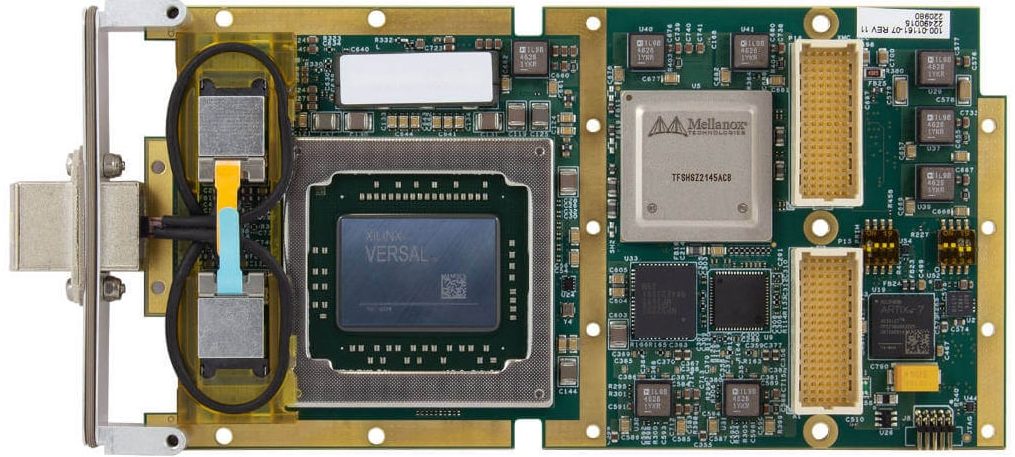
Remote Direct Memory Access (RDMA) allows one system to move data directly into the memory of another without involving the CPU. Network Interface Cards (NICs), such as NVIDIA’s ConnectX-7 — featured in New Wave Design’s V6062 and V6067 3U VPX solutions — can read and write data directly to system memory, so the CPU doesn’t need to devote resources to the transfer while it’s happening. The data is simply there when the CPU needs it.
Because RoCE v2 is RDMA over Converged Ethernet, it’s scalable, routable, and works across networks, instead of within a single board. In fact, RoCE v2 enables total CPU bypass on both sides of the connection, resulting in up to six times greater throughput, less than one microsecond latency, and less than 2% CPU utilization.
Processing power is vital for modern embedded computing applications, so CPUs should dedicate every cycle to processing data, not moving it. By leveraging RoCE v2 to offload data transport, system architects can meet increasing speed and performance demands within strict SWaP constraints.
For military and aerospace applications where speed, efficiency, and scalability are non-negotiable, RoCE v2 isn’t simply an optimization – it’s a mission-critical capability that defines a new era of embedded computing.
If you need help finding the right interface, protocol or need to tweak our FPGA cards for your teams’ needs, contact New Wave Design to discuss your requirements.
Contact us today to see how New Wave Design can collaborate with you to achieve your objectives, leveraging our cutting-edge military and aerospace solutions. Experience our dedication to innovation, quality, and unparalleled customer satisfaction firsthand, and together, let’s turn your challenges into triumphs.
"*" indicates required fields